Beneath the concrete slab of every Flower Mound home runs a network of copper and PVC pipes carrying water and waste. You cannot see them, you cannot easily access them, and when one of them begins to leak, the damage can progress for weeks or months before you notice anything is wrong. By the time a slab leak makes itself known — through a spike in your water bill, a warm spot on the floor, or the sound of water running when nothing is on — it may have already saturated the soil beneath your foundation and started affecting the structure of your home.
Slab leaks are not random bad luck. In Flower Mound, they are a predictable consequence of the geology underneath your house. Understanding why they happen, how to spot them early, and what the detection and repair process involves can save you thousands of dollars and prevent serious structural damage.
Why Flower Mound's Soil Creates Slab Leaks
Flower Mound sits at the intersection of two geological zones: the Blackland Prairie to the east and the Cross Timbers upland to the west. Both zones share one critical feature — high clay content in the soil. This is not ordinary dirt. North Texas expansive clay (primarily montmorillonite) has an extraordinary capacity to absorb water and swell, then release that water and shrink.
The Expansion-Contraction Cycle
After a heavy spring rain, the clay soil around and beneath your foundation absorbs moisture and expands. During a dry North Texas summer — when weeks can pass without rain and temperatures stay above 95°F — that same soil loses moisture and contracts. The volume change is significant: expansive clay can swell 10% to 15% in volume with moisture absorption.
Your concrete slab, poured on top of this soil, rises and falls with these cycles. The movement is not uniform — areas near the foundation edge (which are more exposed to weather) move more than the center. This differential movement puts stress on everything embedded in or running through the slab, including your water supply and drain pipes.
How Pipes Fail Under Stress
Copper supply pipes — the standard material in most Flower Mound homes built from the 1990s through the 2000s — are rigid. They do not flex with the slab. When the foundation moves, the pipes experience bending stress at connection points, rubbing against concrete at points where they pass through the slab, and tension or compression as different sections of the slab move at different rates.
Over years of cyclical movement, this stress creates several failure modes:
- Pinhole leaks. The most common type. Stress concentrations combine with internal corrosion from hard water to create tiny perforations in the pipe wall. The leak is small — maybe a drip per second — but continuous, and the water has nowhere to go except into the soil beneath your foundation.
- Joint failures. Solder joints between copper fittings and pipe can crack under repeated stress. These tend to leak faster than pinhole leaks.
- Abrasion wear. Where a pipe passes through a hole in the concrete, foundation movement causes the pipe to rub against the concrete edge. Over time, this wears through the pipe wall like sandpaper. This is especially common where hot water lines run — the thermal expansion and contraction of the copper adds to the movement.
Recognizing the Signs of a Slab Leak
Slab leaks are insidious because the water escapes underground, out of sight. But there are reliable indicators that something is wrong. The more of these signs you notice simultaneously, the more likely you are dealing with a slab leak rather than an unrelated issue.
Your Water Bill Increases Without Explanation
This is often the first concrete evidence. Flower Mound water bills include a usage chart showing month-over-month consumption. If your usage climbs 20%, 50%, or more without a corresponding change in behavior (no new irrigation, no pool fill, no house guests), water is leaving your system somewhere. A supply-line slab leak can waste hundreds of gallons per day depending on the size of the leak.
The Sound of Running Water
Turn off every faucet, appliance, and irrigation system in your home. Stand in a quiet room — especially over a bathroom or kitchen. If you can hear a faint hissing or the sound of water flowing, water is moving through a pipe that should be static. Check your water meter: if the flow indicator is spinning with all fixtures off, you have an active leak in the supply system.
Warm or Hot Spots on the Floor
If the leak is in a hot water line, the escaping hot water heats the soil and concrete above it. You may notice a specific area of your tile or flooring that feels warm to bare feet — distinctly warmer than the surrounding floor. This is one of the most reliable indicators of a hot-water slab leak, and it also helps narrow down the location before detection equipment is even deployed.
Damp Spots, Mold, or Musty Odors
Water migrating upward through the slab or through expansion joints can create damp spots on flooring, especially carpet. If carpet feels damp in one area for no apparent reason, or if you detect a musty or mildew smell in a specific room, a slab leak may be saturating the subfloor from below. Mold can develop within 48 to 72 hours of continuous moisture exposure.
Cracks in Walls or Foundation
A leaking pipe saturates the soil on one side of the foundation, causing that section to swell while the rest of the foundation remains stable. This differential movement creates cracks — typically visible in interior drywall (especially above door frames and at wall-ceiling joints) and sometimes in the exterior brick veneer. If new cracks appear in conjunction with any of the other signs listed here, the two issues are likely related.
Low Water Pressure
A significant supply-line leak diverts water away from your fixtures. If water pressure has gradually decreased throughout the house (not just at one fixture), the supply system may be losing volume to a slab leak. This is more noticeable with larger leaks.
How We Detect Slab Leaks
Accurately locating a slab leak is essential. Cutting into a concrete slab is expensive and destructive — you do not want to jackhammer your bathroom floor only to discover the leak is under the hallway. Our slab leak detection process uses multiple technologies to pinpoint the leak's exact location before any concrete is disturbed.
Electronic Leak Detection
We use acoustic listening equipment — highly sensitive microphones placed against the slab surface — to listen for the sound of pressurized water escaping from a pipe. Even a small leak creates a distinct acoustic signature as water sprays against the surrounding soil and concrete. By moving the sensor across the slab surface, we can triangulate the leak's position within a few inches.
For more complex situations, we use electromagnetic pipe locators to map the exact path of supply lines through the slab, then combine this with the acoustic data to identify which pipe is leaking and where.
Hydrostatic Testing
A hydrostatic test evaluates the drain system — the PVC pipes carrying waste water beneath your slab. We plug the sewer cleanout, fill the drain system with water to floor level, and monitor the water level over a set period. If the level drops, a drain pipe is leaking beneath the slab. We then isolate individual sections of the drain system to determine exactly which pipe and which section is compromised.
Hydrostatic testing costs $500 and is essential whenever a slab leak is suspected in the drain system, or as a proactive measure before purchasing a home or beginning a remodel. Many home inspectors in the Flower Mound area now recommend hydrostatic testing as part of the pre-purchase inspection process for homes over 15 years old.
Thermal Imaging
For hot-water line leaks, infrared thermal cameras can identify temperature differences on the slab surface that correspond to the leak location. This method is non-invasive and particularly effective when combined with acoustic detection. The warm spot visible on the thermal image often corresponds precisely with the acoustic signature from the listening equipment.
Repair Options: Spot Repair vs. Re-Route
Once the leak is located and confirmed, there are two primary repair strategies. The right choice depends on the number of leaks, the overall condition of the under-slab piping, and your home's layout.
Spot Repair (Tunnel or Jackhammer Access)
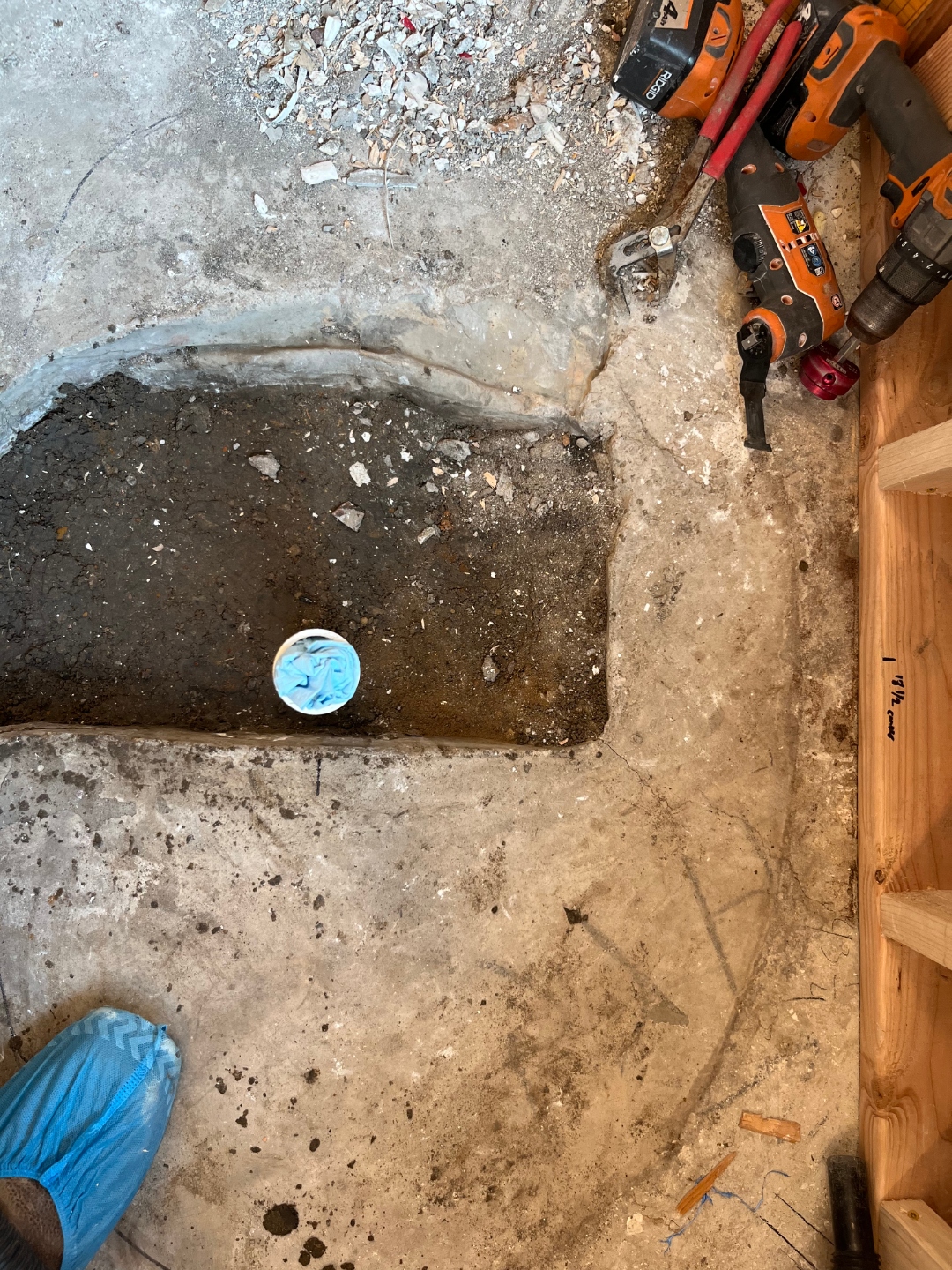
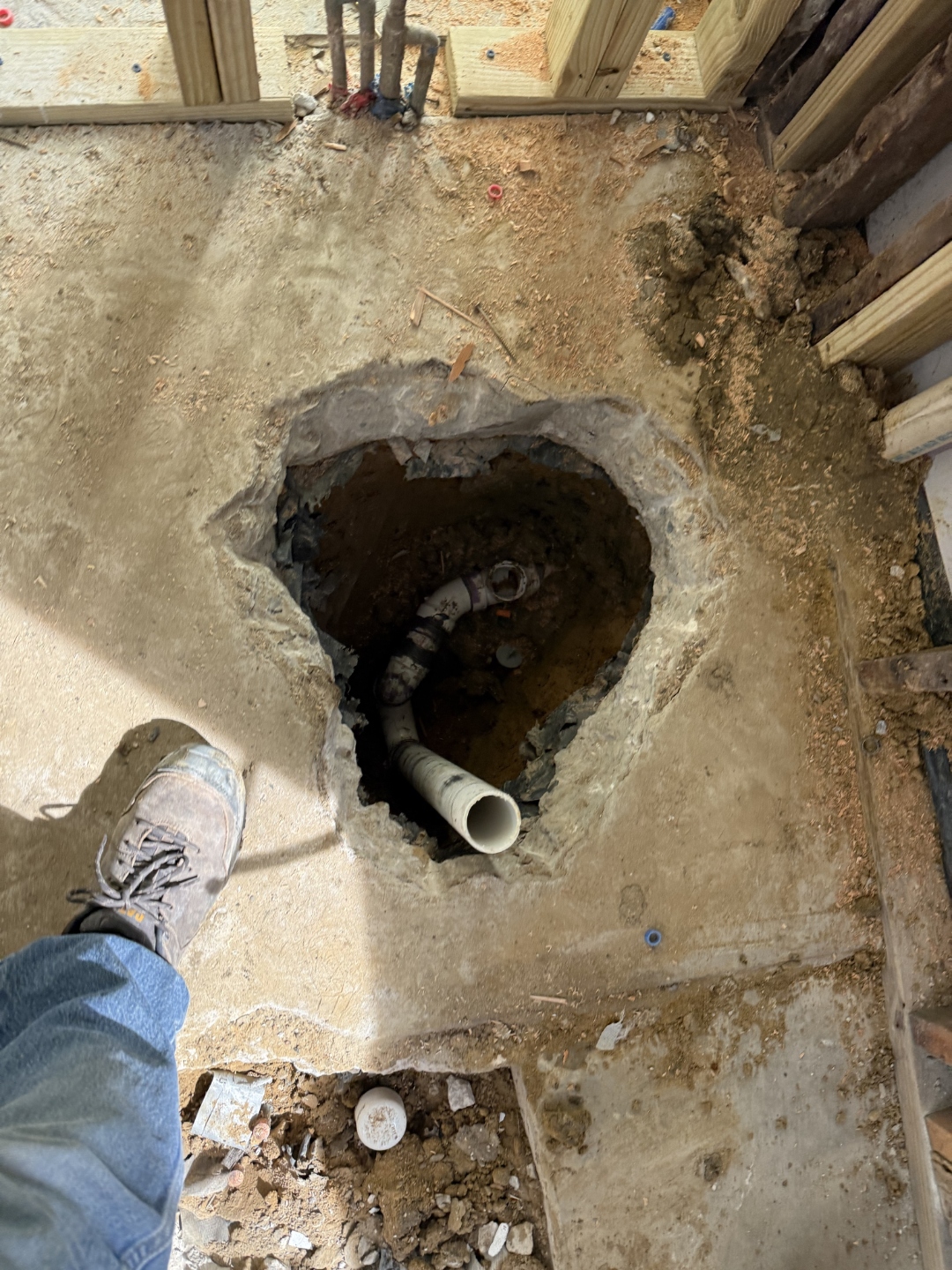
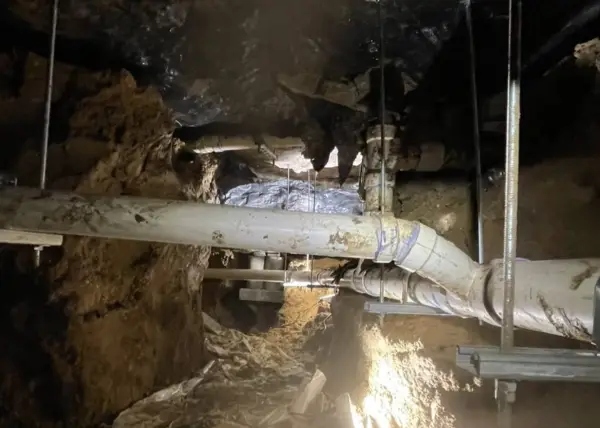
For a single, isolated leak in an otherwise healthy pipe system, we access the leaking section by either cutting through the slab from above (jackhammering) or tunneling from outside the foundation to reach the pipe from below. The damaged section of pipe is cut out and replaced with new copper or PEX, the connections are soldered or joined, and the access point is patched.
Best for: Single leaks, newer pipe systems with good overall condition, leaks in accessible locations.
Limitations: If the pipe system has widespread deterioration (common in homes over 20 years old with hard water), fixing one leak often means another appears within months. You end up doing spot repairs repeatedly, each time cutting into the slab — and the cumulative cost exceeds what a re-route would have cost.
Re-Route (Rerouting Through Attic or Walls)
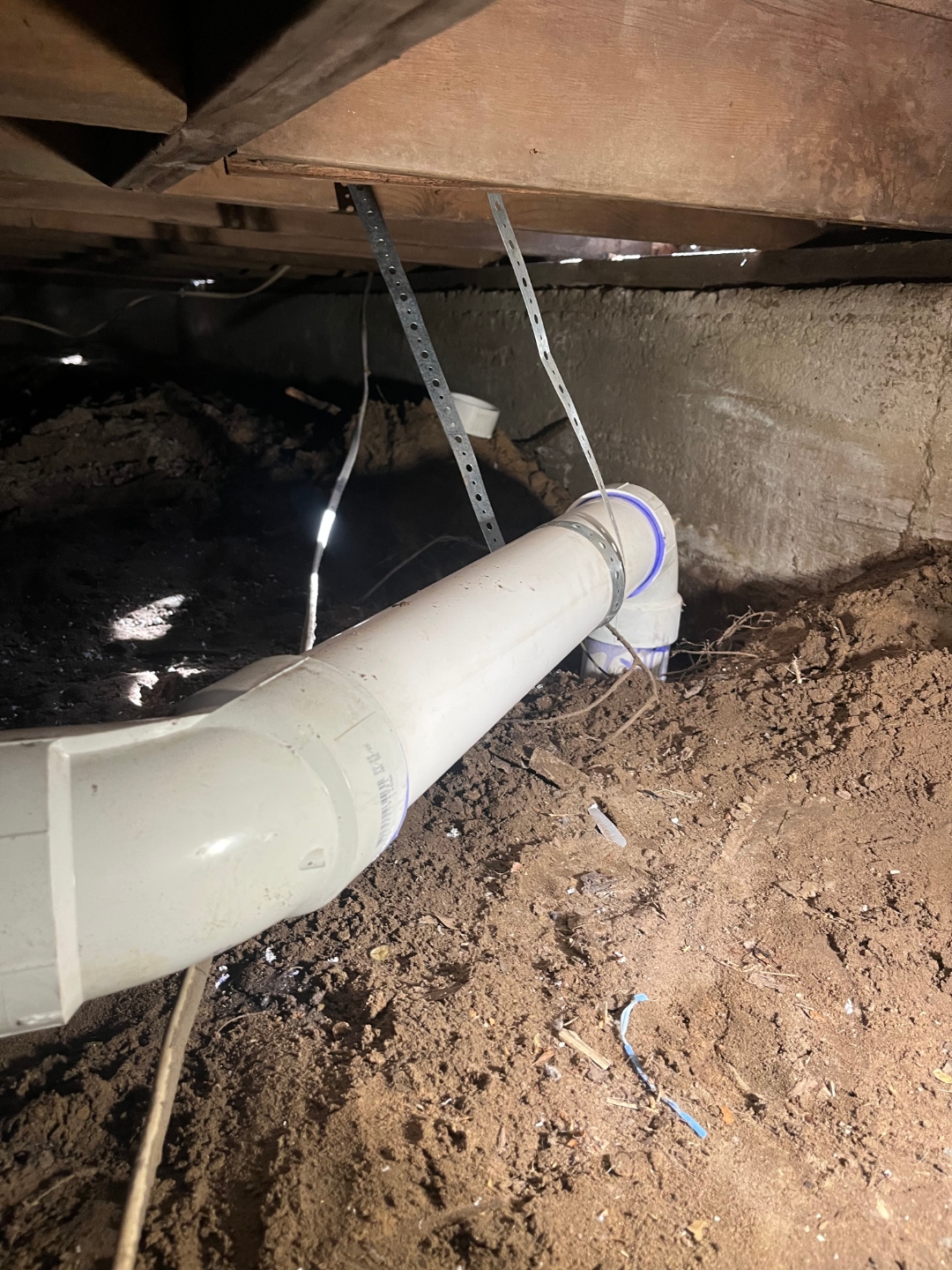
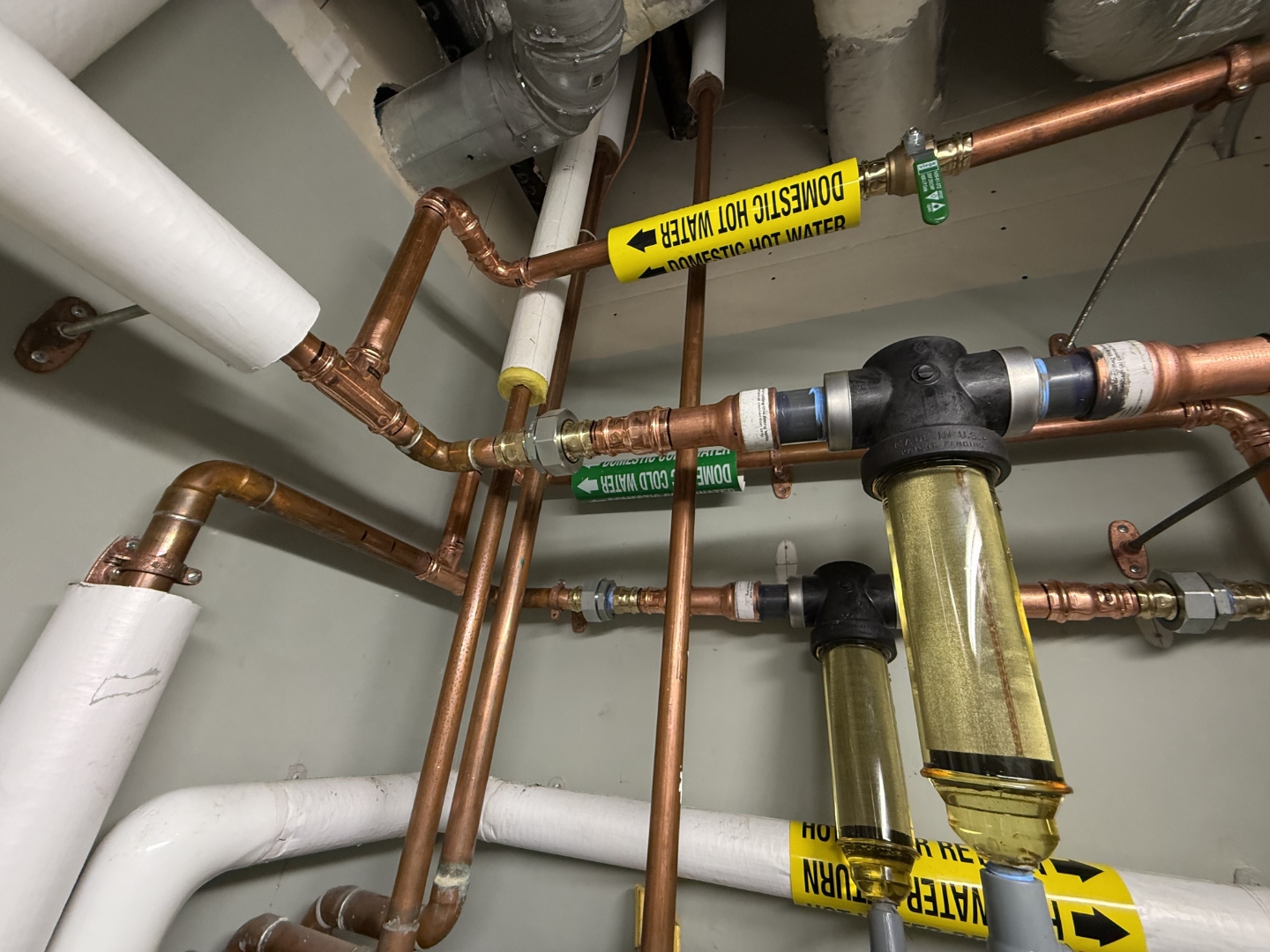
For homes with multiple slab leaks, or where the under-slab piping is in poor overall condition, the most cost-effective long-term solution is to abandon the under-slab pipes entirely and run new supply lines through the attic and walls. The old pipes are capped and left in place (removing them would require extensive slab demolition). New PEX supply lines — flexible, corrosion-resistant, and freeze-tolerant — are routed from the water heater through the attic to each fixture, dropping down through the wall behind each sink, toilet, and shower.
Best for: Homes with multiple leak history, pipes over 20 years old, copper systems showing corrosion. Also ideal when combined with a bathroom or kitchen remodel, since walls are already being opened.
Long-term advantage: A full re-route through the attic eliminates all under-slab supply piping from the equation. Future leaks, if any occur, would be in accessible locations — inside walls or the attic — rather than beneath 4 inches of concrete.

The Insurance Question
Homeowners often ask whether insurance covers slab leak repairs. The answer is typically nuanced: most homeowner's policies cover the resulting damage from a slab leak (wet drywall, damaged flooring, mold remediation) but do not cover the plumbing repair itself (the actual pipe repair or re-route). The rationale is that the pipe failure is considered a maintenance issue, while the water damage is a covered peril.
We recommend filing a claim if a slab leak has caused measurable water damage to your home. Our detection report — which documents the leak location, the damage observed, and the repair performed — provides the documentation your insurance adjuster will need.
Prevention: Protecting Your Flower Mound Home
Complete prevention of slab leaks is not possible when your home sits on expansive clay. But you can reduce risk and catch problems early:
- Monitor your water bill. Track monthly usage. Any unexplained increase of 20% or more warrants investigation.
- Maintain consistent soil moisture. This is the single most effective preventive measure in North Texas. Use soaker hoses around your foundation perimeter during dry months to keep the clay soil from shrinking away from the slab. The goal is stable moisture — not wet, not bone-dry.
- Check your water meter regularly. With all fixtures off, watch the flow indicator for 5 minutes. Any movement means water is flowing somewhere in your system.
- Address water leaks promptly. A dripping faucet or a running toilet is not just wasting water — the excess moisture entering the soil around your foundation can contribute to the expansion-contraction cycle that stresses under-slab pipes.
- Schedule a hydrostatic test when buying. If you are purchasing a home in Flower Mound that is over 10 to 15 years old, a $500 hydrostatic test before closing can reveal drain system leaks that would cost thousands to repair after you own the home.
- Consider a re-route proactively. If your Flower Mound home is over 20 years old with original copper supply lines and you have had even one slab leak, a proactive re-pipe through the attic eliminates the risk of future supply-side slab leaks entirely.
Why Flower Mound Homeowners Trust Haltex Plumbing
Slab leak detection and repair requires specialized equipment, experience reading the results, and the judgment to recommend the right repair approach — not just the cheapest or most expensive option. Our team of master plumbers at Haltex Plumbing (TX RMP 45127) has performed slab leak detection and repair across Denton County for years, developing deep expertise in the specific soil conditions, pipe materials, and foundation types found in Flower Mound neighborhoods.
We carry a 4.9-star rating across 162+ reviews, hold BBB A+ accreditation, and have been named Best of Denton two years running. We serve Flower Mound from our Denton headquarters at 2301 Colorado Blvd, and our same-day service guarantee (call before noon) means slab leak emergencies do not wait until next week.
As part of the Homeyer Enterprises family alongside The Design House and Stonemeyer Granite, we can coordinate with your remodel team if slab leak repair is combined with bathroom or kitchen renovation — a common and cost-effective approach for Flower Mound homes in the 20-to-30-year age range.
We offer a FREE whole-home plumbing inspection, a $75 Refer-a-Neighbor program (both parties receive $75), and a 5% discount for seniors and military members. If you suspect a slab leak, do not wait — early detection saves money and prevents structural damage.
Frequently Asked Questions
Suspect a Slab Leak? Get Detection Today.
Our Flower Mound plumbing team uses electronic detection, hydrostatic testing, and thermal imaging to find leaks without unnecessary demolition. Same-day service when you call before noon.
Call 940-999-7742