If you live in Flower Mound, TX, you already know the town's defining feature: trees. Towering post oaks, stately elms, and thick understory growth blanket the landscape from the shores of Grapevine Lake to the rolling hills along FM 1171. Flower Mound sits squarely in the Cross Timbers ecological region — a narrow belt of ancient woodland that stretches from Central Texas north into Oklahoma. Many of these oaks have been growing for well over a century, their root systems extending 50 feet or more from the trunk in every direction.
Those roots are magnificent above ground. Below ground, they are the single biggest threat to your sewer line. In our years of serving Denton County homeowners, tree root intrusion is the number-one cause of sewer line damage in Flower Mound — more common than pipe age, soil settlement, or construction defects combined.
Why Flower Mound Is Uniquely Vulnerable to Root Intrusion
Not every North Texas city has the same level of root-related sewer problems. Flower Mound's situation is specific and worth understanding, because it shapes both the prevention strategies that work here and the repair approaches that make sense.
The Cross Timbers Factor
The Cross Timbers forest is not like the scrubby mesquite grassland you find farther west, or the blackland prairie to the east. It is a dense, hardwood forest dominated by post oaks (Quercus stellata) and blackjack oaks (Quercus marilandica), along with American elms, cedar elms, and bois d'arc. These are not small, polite ornamental trees. Post oaks develop massive, lateral root systems that spread aggressively through the top 18 inches of soil, seeking water wherever it can be found.
Flower Mound's tree preservation ordinances — enforced by a dedicated Tree Board since 1993 — have kept much of this canopy intact even as the town has grown. That is genuinely good for property values, stormwater management, and quality of life. But it also means that many homes in neighborhoods like Wellington, Bridlewood, and the Tour 18 area sit within reach of root systems that predate the houses themselves.
Aging Infrastructure Meets Ancient Roots
Many of Flower Mound's established neighborhoods were built in the late 1990s and early 2000s. These homes are now 20 to 30 years old, which means their original sewer lines — often Schedule 40 PVC or, in some cases, older clay pipe from the main to the cleanout — are approaching the age where joint seals degrade and micro-cracks develop. A brand-new PVC pipe with tight fittings offers very little entry point for roots. A 25-year-old pipe with a joint that has shifted even a fraction of an inch is an open invitation.
The combination is what makes Flower Mound's root problem so persistent: old-growth trees with enormous root systems, adjacent to aging pipes with deteriorating joints, in soil that experiences significant moisture variation throughout the year.
How Tree Roots Infiltrate Sewer Lines
Understanding the mechanics helps you make better decisions about prevention and repair. Here is what actually happens underground:
- Root detection. Fine root hairs detect trace moisture and nutrients escaping through a pipe joint, crack, or loose fitting. Sewer effluent is nutrient-rich — exactly what roots are looking for.
- Initial entry. A root tip as thin as a human hair enters the pipe through the gap. At this stage, there is zero impact on flow. You would never know it was happening.
- Establishment. Inside the pipe, the root encounters a constant supply of water and organic material. It begins branching and thickening. This stage can take months to a few years.
- Blockage formation. The root mass catches grease, paper, and debris flowing through the line. A partial blockage forms. You start noticing slow drains.
- Structural damage. As the root mass grows and individual roots thicken, they exert outward pressure on the pipe. Cracks widen. Joints separate further. The pipe itself can fracture or collapse.
The timeline from initial entry to serious blockage varies widely — anywhere from 2 to 10 years depending on the tree species, pipe material, and soil conditions. Post oaks tend to be slower but more persistent than elms, which send roots aggressively toward water sources.
Warning Signs Every Flower Mound Homeowner Should Know
Root intrusion rarely announces itself with a dramatic event. Instead, it builds gradually. Watch for these indicators:
- Multiple slow drains. When more than one fixture drains slowly at the same time — a bathroom sink plus a shower, or a kitchen sink plus a washing machine — the problem is likely in the mainline, not individual drain traps. This is the most common early sign of root intrusion in Flower Mound homes.
- Gurgling toilets. Air trapped behind a partial root blockage creates gurgling or bubbling sounds in your toilet, especially when you run water elsewhere in the house.
- Recurring backups. You snake a drain and it clears, but the problem returns within a few weeks or months. Snaking cuts through the root mass temporarily, but the roots grow back — often thicker than before.
- Sewage odors in the yard. If you can smell sewage near your cleanout or along the sewer line path, effluent may be escaping through a root-damaged pipe section.
- Unusually green patches. A section of your lawn that is greener and lusher than the surrounding area — especially in a line from your house toward the street — can indicate a leaking sewer line fertilizing the soil above it.
- Foundation concerns. In severe cases, a leaking sewer line saturates the clay soil near your foundation, causing differential settlement. If you notice new cracks in your slab or walls along with drain issues, the two may be related. Our slab leak detection service can help determine whether water is escaping under your foundation.
Diagnosis: Sewer Camera Inspection
Guessing about what is happening inside your sewer line is expensive. A sewer camera inspection eliminates the guesswork entirely. We insert a waterproof, high-resolution camera on a flexible cable through your cleanout and feed it through the entire length of your sewer line. You see the footage in real time on a monitor — roots, cracks, offsets, bellies, everything.
The camera inspection tells us three critical things:
- Location. Exactly where the root intrusion is occurring, measured in feet from the cleanout. This determines whether the problem is under your yard, your driveway, or the street.
- Severity. Whether roots have caused a partial blockage, a full blockage, or structural failure of the pipe.
- Pipe condition. The overall state of the pipe — material, joint condition, presence of bellies or offsets — which determines the best repair approach.
We strongly recommend camera inspections for any Flower Mound home experiencing recurring drain issues. Given the age of many homes in Wellington, Bridlewood, and surrounding neighborhoods, a proactive camera inspection every few years is also wise even without symptoms.
Treatment Options: From Clearing to Full Replacement
Once we know what we are dealing with, there are several approaches depending on severity:
Hydro Jetting (Root Clearing)
For root masses that have not caused structural pipe damage, hydro jetting is the gold standard for clearing. Our jetter pushes water at 3,000 to 4,000 PSI through a specialized rotating nozzle, cutting through root masses and scouring the pipe walls clean. Unlike a mechanical snake, which pokes a hole through the blockage, jetting removes the entire root mass and restores the pipe to near-original diameter.
Hydro jetting starts at $1,000 and is effective for maintenance clearing when the pipe itself is still structurally sound. For Flower Mound homes with known root-prone lines, we often recommend annual or biannual jetting as a preventive measure — far less expensive than emergency repairs.
Trenchless Pipe Lining (CIPP)
When roots have damaged the pipe enough that clearing alone will not prevent re-entry, cured-in-place pipe lining (CIPP) offers a repair solution that does not require digging up your yard. A resin-saturated liner is pulled through the existing pipe and inflated, creating a new pipe within the old one. The liner cures hard, sealing all cracks and joints — eliminating the entry points roots exploited in the first place.
This approach is especially valuable in Flower Mound, where tree preservation ordinances restrict how close you can excavate to protected trees. Trenchless lining lets us repair the pipe without disturbing the root zone of mature oaks — keeping your trees healthy and your sewer line intact.
Pipe Bursting or Traditional Replacement
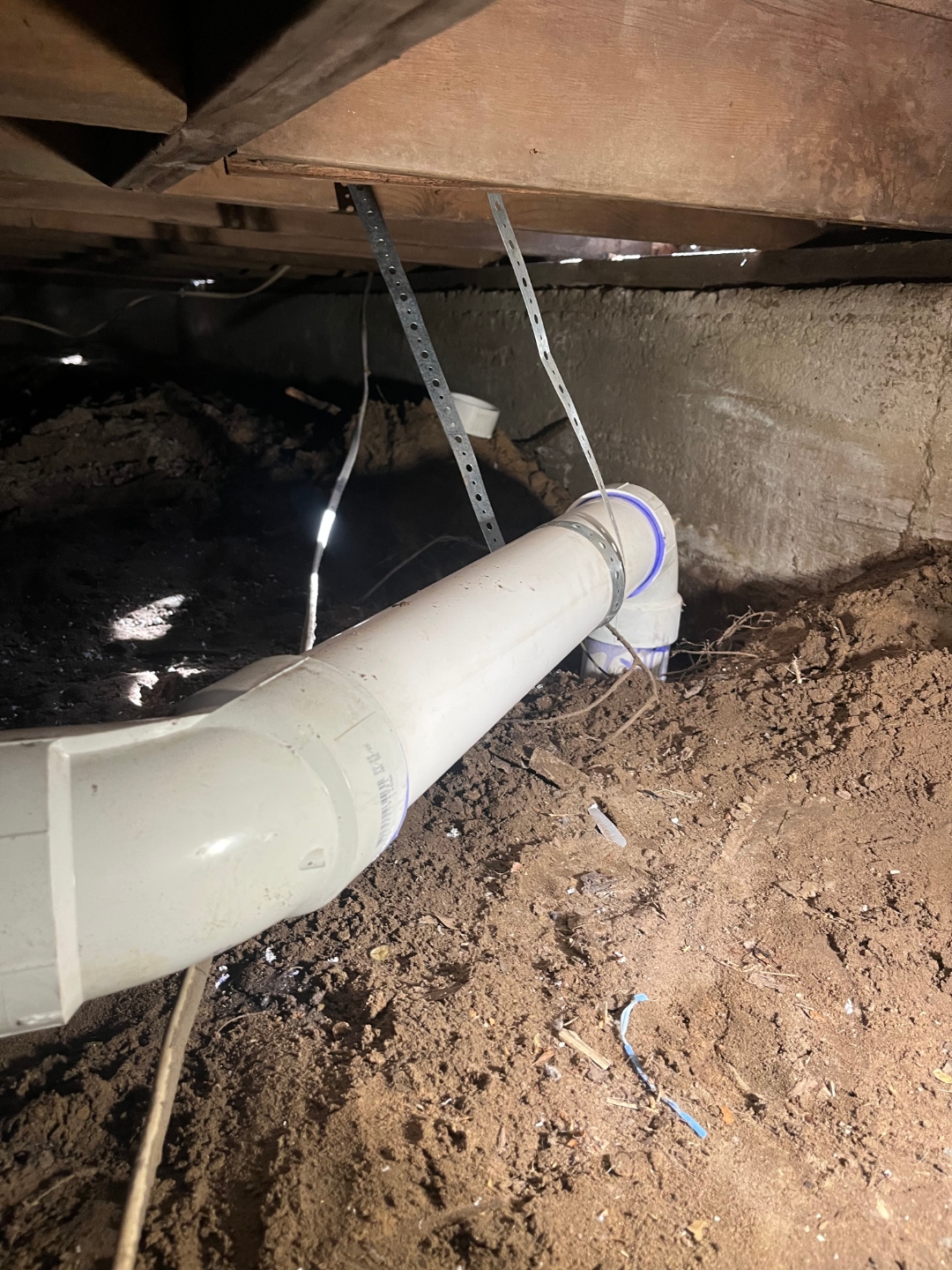
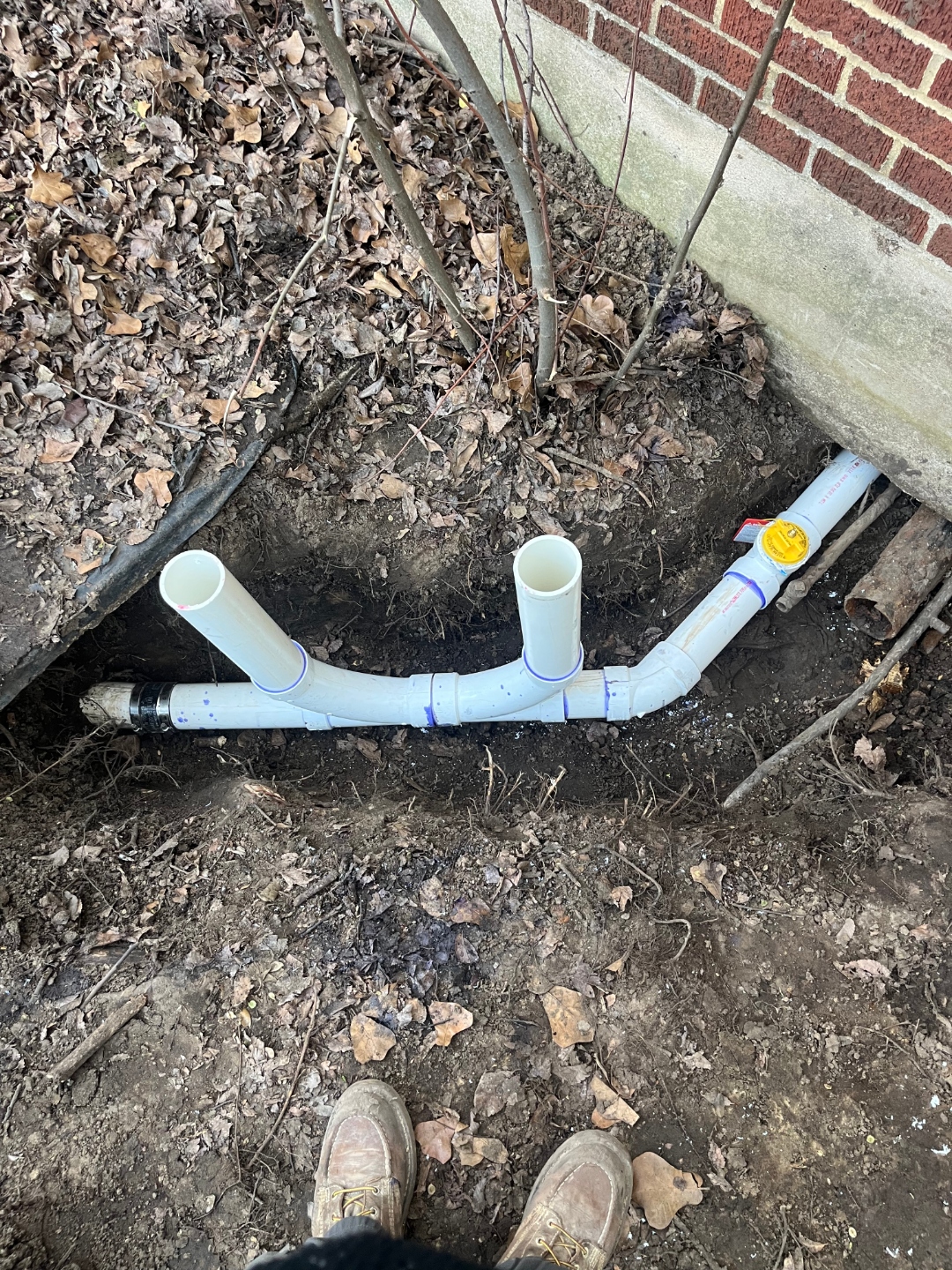
If the pipe has collapsed or is too damaged for lining, replacement becomes necessary. Pipe bursting pulls a new HDPE pipe through the old one, fracturing the existing pipe outward. Traditional excavation involves digging a trench, removing the old pipe, and installing new pipe in its place.
Both approaches work well, but the choice depends on depth, soil conditions, and proximity to structures and trees. Our team assesses each situation individually and recommends the most cost-effective approach that also complies with Flower Mound's tree protection requirements.
Prevention Strategies for Flower Mound Homeowners
Preventing root intrusion entirely is not realistic when you have century-old oaks within 50 feet of your sewer line. But you can significantly reduce the risk and catch problems early:
- Know your sewer line path. Your as-built survey or a camera inspection can establish where the line runs. Avoid planting new trees or large shrubs directly over or near the sewer line.
- Schedule periodic camera inspections. Every 2 to 3 years for homes with mature trees nearby. This catches root intrusion at stage 2 or 3 — before serious blockages or structural damage develop.
- Consider preventive jetting. Annual jetting keeps root growth in check for pipes in known problem areas. Think of it as trimming the roots inside the pipe, similar to how you would prune branches above ground.
- Address slow drains promptly. Do not ignore the early signs. A $200 to $400 drain cleaning visit now can prevent a $5,000+ repair later.
- Upgrade vulnerable pipe sections. If a camera inspection reveals old clay pipe or a section with deteriorating joints, proactive lining or replacement of that section is far cheaper than waiting for failure.
Why Flower Mound Homeowners Choose Haltex Plumbing
We serve Flower Mound and all of Denton County from our headquarters at 2301 Colorado Blvd in Denton. Our team of master plumbers carries 30 years of combined experience working specifically in North Texas soil and sewer conditions. We hold TX RMP License 45127, maintain BBB A+ accreditation, and have earned a 4.9-star rating across 162+ reviews.
For tree root sewer problems, we bring the right equipment: commercial-grade sewer cameras for accurate diagnosis, a high-powered hydro jetter for thorough clearing, and the expertise to recommend the repair approach that actually solves the problem — not just a temporary patch that will fail again in six months.
We also understand Flower Mound's specific requirements around tree protection and excavation permits. When we plan a pipe repair near protected trees, we coordinate with the town's regulations to ensure compliance while getting your sewer line back to full function.
Call before noon for same-day service. We also offer a FREE whole-home plumbing inspection, a $75 Refer-a-Neighbor program (both parties receive $75), and a 5% discount for seniors and military members.
Frequently Asked Questions
Suspect Tree Root Damage? Get a Camera Inspection.
Our Flower Mound plumbing team will diagnose the problem with a sewer camera inspection and recommend the most cost-effective solution. Same-day service when you call before noon.
Call 940-999-7742